

The Startup Brand’s Guide to Low MOQ Clothing Manufacturing
Starting a clothing brand is an exciting opportunity, but one of the biggest hurdles for new entrepreneurs is finding a reliable manufacturer willing to work with small order quantities. Many garment factories require large minimum order quantities (MOQ), making it difficult for startups to test designs or launch their first collection without significant financial exposure.If you’re ready to start producing, explore our low MOQ clothing manufacturer service starting from just 100 pieces per design.
Turkey has emerged as one of the most compelling manufacturing destinations for emerging clothing brands — particularly those targeting European, Middle Eastern, and global markets. With a decades-long textile tradition, a complete supply chain, and factories increasingly open to flexible production runs, Turkey offers a powerful combination of quality, speed, and accessibility.
In this guide, we explain how low MOQ clothing manufacturing works in Turkey, where to find the right suppliers, and how to evaluate them before placing your first order.
What Is a Low MOQ Clothing Manufacturer?
A low MOQ clothing manufacturer is a factory that allows brands to produce garments in relatively small quantities compared with traditional large-scale operations. MOQ — Minimum Order Quantity — represents the smallest number of units a factory is willing to produce per order.
In Turkey, MOQ levels typically break down as follows:
| Factory Type | MOQ Range | Best For |
| Large Factories | 500–1,000 pcs/style | Established brands |
| Mid-Sized Factories | 200–500 pcs/style | Growing brands |
| Low MOQ Factories | 100–150 pcs/style | Startups & new brands |
Lower order quantities allow startups to experiment with multiple designs, colors, and size ranges without committing to large inventories — a critical advantage when entering the market for the first time.
Why Startup Brands Choose Turkey for Manufacturing
Proximity to Europe and Fast Delivery
Turkey’s geographic location provides a decisive advantage for brands targeting the European market. Compared with sourcing from East Asia, shipments from Turkey to European destinations are completed in a fraction of the time. For brands operating with tight collection cycles or urgent reorder needs, this speed can be a game-changer.
High Quality Standards
Turkey’s textile industry has decades of experience supplying major European and international retailers. Turkish manufacturers are accustomed to meeting stringent EU compliance requirements, which translates into consistently strong quality standards across fabrics, construction, and finishing.

Flexible and Customizable Production
A large portion of Turkish manufacturers readily accommodate brand-specific requests — including custom fabric selection, colorways, labeling, packaging, and fit adjustments. This flexibility is especially valuable for brands seeking to build a distinctive product identity from the outset.
A Complete Textile Ecosystem
Major manufacturing hubs in Istanbul, Bursa, and Izmir are supported by robust networks of fabric mills, trim suppliers, and finishing specialists. This integrated ecosystem makes sourcing faster and more efficient, reducing lead times and simplifying logistics for overseas brands.
Where to Find Low MOQ Clothing Manufacturers in Turkey
Online B2B Platforms
Many brands begin their supplier search through established sourcing platforms:
- Turkish Exporters Assembly (TIM) directories
- Alibaba (filtered by Turkish suppliers)
- Europages
- Istanbul Textile and Apparel Exporters’ Association (ITKIB) catalogue
These platforms allow brands to compare suppliers, request quotations, and review product catalogues. It is important, however, to verify whether a listed company is an actual factory or a trading intermediary before proceeding.
Trade Fairs and Textile Events
Events such as TEXPO Eurasia, Istanbul Fashion Connection (IFCO), and Premiere Vision Istanbul offer direct access to Turkish textile manufacturers. These fairs provide an opportunity to review portfolios, request samples, and assess production capabilities in person — a significant advantage when building a manufacturing partnership from scratch.

Private Label Manufacturers
Several Turkish factories specialize in private label production for startup brands, allowing brands to customize existing garment styles with their own labels, trims, and branding. This approach can reduce development time and simplify the overall manufacturing process for brands at an early stage.
Understanding Cut and Sew Manufacturing
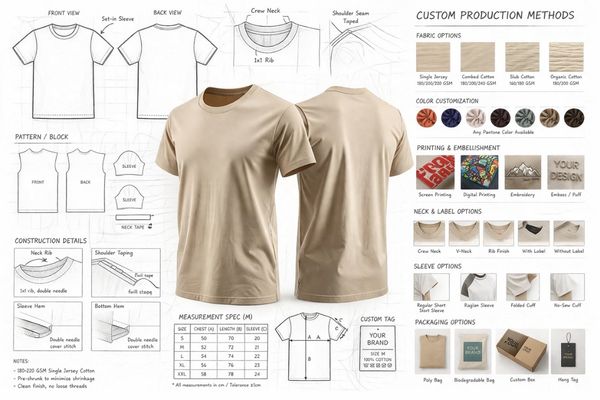
When selecting a clothing manufacturer in Turkey, it is important to understand the distinction between customizing existing blank garments and full cut-and-sew garment production.
Cut-and-sew manufacturing involves creating garments directly from raw fabric, following the brand’s original design specifications rather than modifying pre-made blanks.
Brands seeking truly unique products typically work with a cut-and-sew manufacturer. This process encompasses:
- Pattern development and grading
- Fabric sourcing and quality testing
- Garment cutting, assembly, and construction
- Custom sizing and fit adjustments
- Label, hang tag, and packaging integration
Cut-and-sew production enables brands to develop completely original products rather than simply decorating commodity blanks — an important distinction for brands building a serious identity in the market.
How to Evaluate a Turkish Clothing Manufacturer
Check Product Specialization
Many Turkish factories specialize in specific product categories — denim, knitwear, outerwear, activewear, or streetwear. Partnering with a manufacturer experienced in your target category typically leads to stronger results and fewer production complications.
Request Samples
Sampling is a non-negotiable step when working with any clothing manufacturer. Samples allow brands to evaluate:
- Fabric quality and consistency
- Stitching precision and durability
- Finishing quality and attention to detail
- Size and fit accuracy
Reviewing samples carefully before approving bulk production helps identify issues early — when corrections are straightforward rather than costly.
Assess Communication and Reliability
Clear, professional communication is essential to a successful manufacturing relationship. A reliable Turkish manufacturer should offer prompt responses, transparent pricing structures, and realistic production timelines. Strong communication significantly reduces the risk of costly misunderstandings during production.
Review Factory Certifications
Where possible, prioritize manufacturers holding certifications such as OEKO-TEX, GOTS, or ISO standards. These credentials provide independent assurance of production quality and compliance — particularly relevant for brands selling into regulated European markets.
Typical Production Timeline
When working with a low MOQ clothing manufacturer in Turkey, the production process generally involves the following stages:
| Production Stage | Estimated Duration |
| Design & Tech Pack Approval | 3–7 days |
| Sample Development | 7–14 days |
| Sample Revision | 5–10 days |
| Bulk Production | 20–35 days |
| Total Estimated Time | 35–66 days |
Careful planning at each stage helps ensure a smoother process and reduces the likelihood of delays affecting your collection launch.
Common Mistakes Startup Brands Should Avoid
Choosing Based on Price Alone
The lowest quote does not always indicate the best supplier. Unusually low prices can signal inferior materials, substandard construction, or unreliable delivery. Quality, reliability, and communication should be weighted equally alongside cost.
Skipping the Sampling Stage
Some brands attempt to skip sampling to save time or money. This approach frequently leads to serious problems during bulk production that are far more expensive to resolve. The sampling stage is an investment, not an overhead.
Providing Incomplete Technical Specifications
Manufacturers require detailed information to produce garments correctly — including fabric specifications, technical measurements, trim details, and branding requirements. The more comprehensive the technical pack, the fewer errors and delays arise during production.
Neglecting Intellectual Property Protection
Before sharing original designs or detailed technical specifications, consider requesting a Non-Disclosure Agreement (NDA) from your manufacturer. This step is especially important for brands developing original collections intended to be exclusive to their label.
Conclusion
Finding a reliable, low MOQ clothing manufacturer in Turkey is one of the most important decisions a new brand will make. Manufacturers that support smaller production runs allow startups to test designs, manage financial risk, and scale production gradually as market demand grows.
By researching suppliers carefully, requesting samples, maintaining clear communication, and protecting your intellectual property, your brand can build a strong, long-term manufacturing partnership in Turkey — and create a solid foundation for sustainable growth.
Work Directly with the Founder
If you’re looking for that kind of partner, Çiğdem Çelik is exactly who you want in your corner. Based in Turkey, Çiğdem personally oversees every production — from the first sample through to the finished garment. She works directly with startup brands, boutique labels, and small businesses, bringing hands-on expertise, genuine flexibility, and a level of personal attention that large factories simply can’t offer. Whether you’re producing your first 100-piece collection or scaling an established line, Çiğdem is here to guide you through the entire process — from design and fabric selection all the way to delivery.
Reach out to Çiğdem directly to talk through your project. No obligations, no generic templates — just an honest conversation about what your brand needs and how she can help make it happen.
Frequently Asked Questions
What is considered a low MOQ in Turkey?
Most low MOQ clothing manufacturers in Turkey offer minimums between 100 and 150 pieces per style, though this can vary depending on fabric requirements and the level of customization involved.
Can overseas brands work with Turkish manufacturers?
Yes. Many Turkish factories regularly collaborate with brands based in Europe, the Middle East, North America, and beyond. Video consultations, digital sample approvals, and international logistics are standard practice for experienced exporters.
What is the difference between private label and cut-and-sew manufacturing?
Private label production involves customizing existing garments with a brand’s labels and design elements. Cut-and-sew manufacturing creates garments from raw fabric according to the brand’s original specifications — offering a higher degree of uniqueness and design control.
How long does production typically take in Turkey?
For most small-batch orders, total production time — including sampling and bulk production — ranges from approximately 35 to 66 days. This varies depending on the manufacturer, product complexity, and current factory capacity.